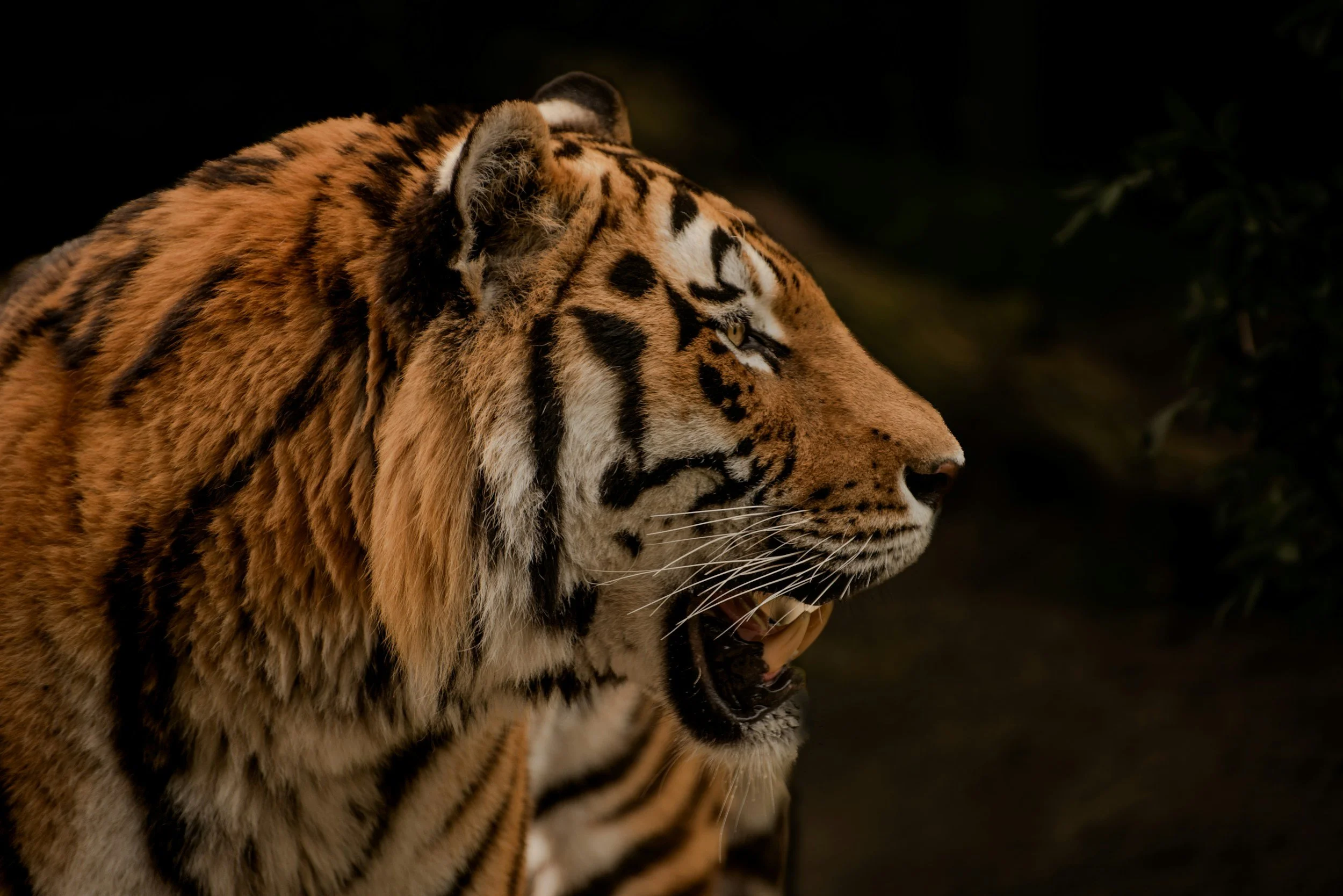
Tiger Skins
*
Tiger Skins *
Tiger Skins is a literary novel exploring the idea of the body as a vessel, a keeper of family history, memory and generational trauma. It follows four generations of the Haideri family carrying the pain of migration and displacement within their bodies until they crack under its weight. The novel explores the ideas of motherhood and motherland, rejection and belonging; the idea that home is more than a physical place, that it can be found within the echoes of the stories living inside us.
The novel is a work of autofiction. I take stories passed down my own family and weave them into the narrative. I want to play with the malleability of stories, especially those based on memories and oral anecdotes, and how they can be changed and bent to suit the narrator until it is hard to distinguish truth with fiction. Because more important than the veracity of the plot is the truth of the emotion that is passed down from one generation to the next. The plot stands for the physical lands adopted by the immigrants – unfamiliar, sometimes unreliable and overwhelming but with the capacity of becoming home only when the immigrant has accepted their history and own sense of self.
The story begins in colonial India at the edge of a rapidly vanishing forest in Uttar Pradesh. A young girl, Begum, kills a tigress and her cubs, unwittingly setting in motion the turbulent stories of her descendants. Burdened by the tigress’ curse, the Haideris, like the tigress, are forced off their ancestral lands, forever plagued by a feeling of restlessness, of not belonging. Each time they uproot and replant themselves and try to blend into their new homeland, they lose essential bits of their stories, history and identity, blows and dents to the self or spirit that are passed down as generational trauma.
I is separated into three migrations: from united India to East and West Pakistan, from East Pakistan (Bangladesh) to West Pakistan, and then from Pakistan to the UK. Within this framework, the chapters are organized around a treasured object like a piece of jewellery, religious relic, paintings, as vessels of family lore carried across borders and passed down from one generation to the next. I also use Shia religious symbolism, for example stories of the Imams, symbolism of the Alams, along with magical and mythical lore from the sub-continent to explore memory, migration and inheritance.
I began Tiger Skins while I was doing a Fellowship at Instituto Sacatar in the Summer of 2026. Living and working with other artists gave me the confidence to work on an idea that had been percolating inside my head for a while. With Tiger Skins I hope to create work that has cultural and artistic relevance but also brims with imagination and magical and spiritual realism.
Tiger Skins
〰️
Tiger Skins 〰️

Intro
These are the histories of ordinary women and the men they loved, held within their chests, in the space behind their hearts, unspoken for years. But then – often a desire for someone to bear witness that they had lived to the best of their abilities – they were remembered and recounted in voices faded with age or tiredness. And, in the recollecting and retelling these histories have become stories, for what are stories but remembered truth mixed with fiction, until it is hard to tell what is true and what is untrue.
It all depends on whom you ask and what you believe.
Prologue
There was a story whispered about the Haideri women, one that explained their ferocious stubbornness, those sharp noses and golden eyes that could stare into the depths of your soul and find you wanting. It was written in the majesty of their bearing, the way they held their shoulders back and walked with firm steps on the earth, sure of their place and their right to hold that space, which made them unlike other women.
The story goes something like this. Once, more than a hundred years ago, there was a well on their ancestral lands in Haiderpur, Uttar Pradesh, India. And on nights when the moon was full and bright like the eyes of a doe eyed beauty, and the stars glittered like her spun silver veil, tigers would slink out of the forests surrounding the village. The world would hold its breath, as they sauntered in near silence to the well; ten, fifteen, twenty of the majestic beasts with their orange and black stripes and amber eyes that blazed like tiny suns in the cold night. They drank from the well until their thirst was sated and then lay on the grass grooming themselves, for they were well aware of their beauty. They allowed their young cubs to frolic around them, teasing and leaping over their prone forms, secure in the knowledge that none would dare disturb them, as there was no other beast stronger or more dangerous.
Then, in the mornings following the moonlit tiger nights, the Haideri women, from the oldest to the youngest, would make their way to the well, hips swaying, anklets jingling, delicate feet clad in silk slippers stepping over the footprints of the tigers. Singing songs of love and magic, they filled their earthenware matkas with cold well water and drank until their bellies were full. Then they too lay on the grass and oiled their bodies and tied ropes of sweet jasmine and raat ki rani into each other’s braids.
And so, it was said, that they absorbed the strength, the wiliness, the wilfulness of the tiger and passed it on, blood to blood, cell to cell, onto the future generations of Haideri women. In some it manifested as a quiet strength, while in others it roared and struck out with tooth and claw. But one thing held true for each one of them. They all inherited the tigers’ eyes of a rich tawny brown. It was said that the stronger the tigers’ blood flowing in their veins, the more gold and amber their eyes.
No one else had the audacity to do what they did. For wasn’t a woman’s worth dependent upon her value as a daughter, mother, wife? Unless forced, no man in his right mind would want a woman with the spirit of a tiger. And so, the well would lay abandoned until the next full moon when the tigers came out again and the Haideri women stubbornly followed their well worn path to the well.
Then many years later, when the tigers were gone, the land sold and with it the well, the magic too was gone forever. But the amber eyes lived on, passed from one generation to the next.
Here is another story. Of the slaying of the last tiger of Haiderpur, as witnessed and abetted by the last Begum of Haiderpur. Both doomed to be the last of their kind, though neither was to know their fate when they first locked eyes in the jungles of Uttar Pradesh. The story is hidden inside the memory of a ten-year-old girl and thus some parts could be said to be the vivid creation of a lively imagination. But so many years later who is to know the truth from fiction?
Like most good stories, it started with a few gruesome deaths.
A man-eating tiger went rampaging around Haiderpur, dragging its victims from their fields into the forest, leaving only bits of flesh, bones and cloth behind. After it had killed four men, 13 buffalos and countless chicken, the Old Nawab held a panchayat for the village to discuss options. The Begum, who was only Little Begum then, peeked through the curtains separating the zenana from the courtyard where the village elders had collected to listen to the testimony of the sole survivor, a sixteen-year-old girl.
She stood amongst the crowd of men without a dupatta or any covering, displaying the red and raised claw marks that started from her forehead and disappeared down the neckline of her shirt. Describing the attack in an emotionless voice, fear frozen like shards of ice in her dark eyes, as if along with shreds of skin the tiger had also taken parts of her soul, she said, “It was around dusk. I was collecting firewood at the edge of the sugarcane field for the evening dinner when I heard a noise. I looked up and there it was, sitting on the low branches of a mango tree. I don’t remember a lot after that. I think I screamed. It jumped on me and I fell. There was a burning on my face and chest. And blood. So much blood. Then my father and brothers came. They threw stones and sticks so it ran away.”
It was decided by the Old Nawab that they would call a tiger hunt.
The Old Begum protested. Said it was too expensive, but the Old Nawab, remembering the grand hunts of his childhood overruled her. He also insisted that the future Little Begum accompany him on the hunt. When Little Begum’s widowed mother protested, the Nawab said, “She’s to be the next Begum of Haiderpur, my son’s wife, and you want her to cower at home while a tiger roams free? What kind of children will she raise? Cowards. Not my descendants!” He also muttered something unfavourable about his son, the future Nawab who was away at Cambridge at the time, but everyone pretended not to hear him.
So, after a week’s preparation they set off for the hunt with 6 elephants mounted with howdahs and their mahouts, guards on a dozen horses, guns and enough ammunition for a small army. The mansion had filled with the Old Nawab’s friends, drawn by news of the tiger hunt and visions of ancient glories. The Old Begum muttered about the expense as the men ate and drank all day long, but having married into the Haideris, she had no real power to do anything.
The Old Nawab gave the Begum-to-be lessons on loading and shooting a rifle, appalled that his brother’s orphaned child had been so neglected in the Nawabi arts. She showed a rare aptitude, her instincts and aim true. A real Haideri woman, the Nawab thought proudly. One who would straighten his wayward and delicate son.
And so, they set off for a tiger hunt.
On the first morning, they were all up and ready before dawn, the Little Begum bleary eyed and yawning. She scrambled up the ladder to her uncle’s howdah, given the rare privilege of being at the forefront of the hunt. They crossed the village and farms on their swaying elephants; a lush, mostly flat land, crisscrossed with streams and acres of sugar cane fields. Heat rose in damp waves from the ground, the very air imbued with the syrupy scent of sugarcane, of which fields upon golden fields acted as a border between their village and the forest. In the past few years, a silent battle had been waged between the expanding village and the forest, with the forest losing ground as fields of sugarcane and rice ate up large swathes of the woods.
A rough camp was set up at the edge of the forest where the tiger had attacked the girl. The servants had already built a tall wooden machan or lookout where two guards had been keeping watch all week.
They staked a buffalo as bait. All day long it lowed, its dark eyes rolling in panic, as if it sensed its fate. They heard growling in the underbrush and the Little Begum’s skin broke out in gooseflesh as she felt the tiger’s eyes on her, watching, waiting, marking her. She knew, though she did not know how, that the tiger was a female. A tigress.
They waited and waited. The sun began to set, the wind whistled through the sugarcane, the shadows lengthened and darkened, and monkeys chittered and screeched as if they were mocking the hunters. The wily tiger never showed its face.
The buffalo was killed and roasted for dinner under the stars. It was delicious, thought the Little Begum. The best meat she’d ever had.
On the second day they mounted the elephants again and decided to venture into the forest. Bushes crunched as the beasts crashed and tore their way through the thicket; branches swung at their faces as if the forest too was trying to keep them out. Parrots screeched their disapproval as they flew out of the trees. Finally, the mahouts whispered in excitement for they had spotted the tiger’s paw prints. They got off the elephants and tracked the prints on foot. Little Begums heart beat so fast that she felt sick.
They heard a soft mewling as they neared some bushes. The Nawab got off the elephant and used his gun to part the branches and there, nestled within its safety, were two striped cubs with large golden eyes. The men let out a shout of victory. Startled, the cubs tried to run, but it was already too late. The guards lifted them from the scruff of their necks for the party to see.
“Do you want to do the honours?” the Old Nawab asked Little Begum.
“What?” she asked, her eyes on the little ones as they whimpered and wriggled, trying unsuccessfully to scratch the hands holding them captive.
“Come down and shoot them.”
The Little Begum stared at the Old Nawab. Mouth dry, she managed to nod. She swung over the side of the howdah and to her eternal embarrassment slipped and landed on her bottom. The Nawab frowned. Hands shaking she took the gun from him. Even as a child she knew that this was a test. If she said no, any respect that he had for her as the future guardian of his lineage would forever be lost.
“Aim between the eyes,” he whispered in her ear, his breath hot and smelling of the paan he liked to chew.
She crept closer to the cubs, so close she could smell their musty, animal scent, could almost reach out and feel the softness of their pelt. She lifted the gun and focused on the wriggling bodies, held aloft by the scruff of their necks by two terrified servants. She took a deep breath to steady her hand. Two shots were all it took. Her aim was flawless.
Everyone clapped. The servants holding the cubs slumped in relief that she had not shot them by accident.
The Nawab beamed in pleasure as she handed the gun back. “That’s my girl,” he crowed, laying a heavy hand on her shoulder. “That’s my true Haideri blood.”
Little Begum pushed her horror deep inside, sealed her mouth shut and swallowed the bile burning up her throat.
“What now?” asked one of the Old Nawab’s guests.
“Now we wait for the mother. She is sure to show up sooner or later,” he said.
They all climbed back to the safety of their howdahs to wait. The sunlight began to fade. The only sound was the elephants shifting as they moved their trunks to snack on leaves. The Little Begum rested her head on the side of the howdah, lulled by the rocking and the heat, except that as soon as she closed her eyes she’d hear the mewling, pleading sound the cubs had made right before she’d shot them.
Then, just as the setting sun was painting the forest in shades of the ripest narangi orange they heard a mighty roar, a vicious primal sound, torn from the depths of the soul, a cry of loss, anger and so much sorrow that it was to stay with little Begum for the rest of her long life, echoing in her ears times of distress. The elephants trumpeted their fear and the mahouts strained to keep then under control.
Suddenly, the tigress was there.
She was beautiful. Wild. Her body vibrated with strength; power barely contained within a burnished pelt. She opened a mouth full of jagged teeth and roared again. And then she leapt, claws digging into the bucking elephant’s trunk as she smashed into the front of the howdah. The Nawab fumbled for his gun, but a swipe of her paws sent it flying into the jungle. And then its eyes landed on Little Begum as if she knew.
Little Begum saw all this disconnected from reality, as if she was watching it in one of those new talkies she had seen when she was in the big city. Shouts and movement came to her from a distance. For the longest time it seemed as if it was just her and the tigress, two golden eyes locked in a stare that bared their selves to each other. All the terror, rage, and anguished resignation for the blood spilled in the past, present and for what was to come flashed between them, tying them to each other with the sturdy knots of destiny. In the tigresses’ eyes there was no forgiveness, only acceptance for her fate.
And so, it was with the dawning realization of the inevitability of that very moment that Little Begum watched herself lift her rifle and pull the trigger. There was a loud bang that made her ears ring and a recoil that she felt in her shoulder for days. The tigress was flung back. For a few seconds there was nothing but a shocked, painful silence. Then sound returned as the elephant, trumpeting hysterically, bolted. With a bone jarring jolt the Little Begum fell back into the Howdah, her rifle lost over the side. She closed her eyes and wrapped her shaking arms around her knees. Next to her Old Nawab was shouting and swearing at the mahout, the mahout was shouting at the elephant, the elephant trumpeted its distress as it fled, but none of it touched her. All she could think of were those aching amber eyes.
It took the mahouts almost an hour later to calm the elephant and coax it back to their camp where they found the villagers celebrating by playing drums and singing. The servants were in the process of skinning the tigress and her cubs.
Little Begum watched as they hung the animals’ bodies on poles and then peeled the pelt from the red, wet flesh. Using sharp, thin knives, they started from the tigress’ jaw all the way down to her paws and tail. She wanted to close her eyes, to hide, but she could not slip away for the proud Old Nawab had his arm around her shoulder as he regaled the villagers with how their future Begum was the one who’d killed the man-eating tigress. Amongst the crowd was the mutilated girl, her scars still vivid and enflamed, visible in the deepening evening. When the Little Begum caught her eye, she just nodded curtly and walked away.
“The hunt,” said the Nawab to Little Begum when he later presented her with the tiger pelts, “was not just about the hunt or the tiger. It was a lesson about power, dominance and survival. The tiger is one of nature’s fiercest predators and there was no guarantee of our victory over it, but when the time came, you kept your head. You showed that you have Haideri blood running through you.”
“Fiercer than my son,” he muttered under his breath.
But the Little Begum couldn’t help wondering which of the two was braver or in the right? The tigress, who fought for the life of her cubs, who killed to feed her cubs, whose every action was based on her true, essential nature? Or the humans with their hubris, their meditated violence, aimed at encroaching on and subduing the wild?
Who then was the true aggressor? Who then was the true beast?
And what was the price, because all the stories she had heard or read had taught her that there was always a price which she would pay for her actions on that day.
It was a question that was to haunt her for the rest of her life.
The tiger pelts, one large, two small, became part of her dowry and came with her to the Lucknow house when the ancestral haveli and lands were sold. She could not bear to look at them, but she could not get rid of them. So, they hung, collecting dust in her husband’s study, until that too was lost to them.